
 £
£
We use cookies to improve your experience. By accepting you agree to our cookie policy

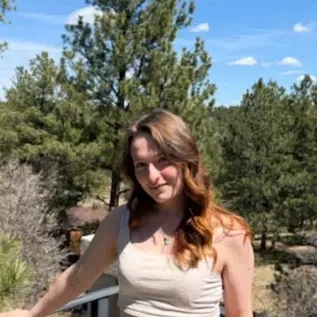
On an ordinary Sunday in November 2015, Emily's left arm started to hurt out of the blue. Pain around her arm and wrist kept bothering her, and as a music prodigy and athlete, a sore arm was something she couldn’t ignore.
As a frequent writer, the doctor was quick to diagnose Emily with carpal tunnel and send her off with an arm brace. However, the pain intensified and spread like wildfire to her shoulders, back, and neck.
Trying to find an explanation for her pain, Emily and her family met with doctors and specialists, leaving no stone unturned as she continued to get tested. When doctors discovered a genetic link to lupus on her mother's side, they suspected that she may also have the autoimmune disease.
Emily said: “In the end, they landed on something similar to ALS and told my parents – but not me – that I only had a few months to live. My parents didn’t tell me it was deadly or even the name. They told me not to look it up or get too worried.” However, Emily was soon in the know after she overheard a hushed conversation between her parents and siblings.
“I looked up the name I had heard at the time, and that’s how I found out about my supposed death sentence at 14.”
Believing she would soon die and living in pain, Emily fell into severe depression but continued to put on a brave face around others and at school. Not long after, her symptoms spread to her legs and quickly consumed her entire body.
Returning to the hospital in agony, she was told her condition hadn’t developed as expected, so she must be “faking it for attention”, which resulted in a refused referral. That was, until her condition took a turn for the worse in mid-January.
“I woke up and could no longer move. My mom had to spoon-feed me, and I thought that it was over for me. My family hauled me into the car, and my mom drove us to the doctor one last time.
“She yelled at the receptionist while my dad called and did the same, trying to get the doctor to see them or me.
“Eventually, he came out, and said something like ‘fine, I will humour you.’
“That same day the doctor called the rheumatologist specialist, and told him about my situation, how I was walking like a drunk zombie, and that I was faking being moderately paralysed.”
Over the phone, the specialist immediately recognised Emily’s symptoms as Complex Regional Pain Syndrome (CRPS) and asked her doctor to schedule an appointment with him for the next day, despite having a year-long waitlist.
Within five minutes of meeting Emily, she was diagnosed with CRPS.
Then, still in high school, Emily said she was confused upon receiving her diagnosis; happy to hear that she wasn't facing imminent death, but also concerned about the prospect of living with CPRS for the rest of her life.
Emily received sensory overload therapy for almost a year. “I did it in high school and have never gone back due to its traumatising nature,” she said. “However, it’s the reason why I can do what I do today.”
Newer treatment options have tempted her, but she has been put off by their unaffordability and temporary relief.
Emily describes the condition as a “living hell”, despite the sensory overload therapy. “Yes, I am healthy, do active activities, am a student, work and have a social life of sorts, but no, I am not better. I put on a mask every day I wake up and act as best as I can to be a normal person and student. However, mentally, I am constantly exhausted and feel like I will collapse at any moment.
“Physically, I struggle with building and maintaining muscle mass as my muscular atrophy is a prominent feature of my own CRPS. Emotionally, I am still relearning the constant trauma it puts me through.
“At times, I feel like I see the path forward with this condition. And other times – especially once I am alone – I feel like I should give up as there is no way I can maintain the lifestyle I want to live.”
The hardest part of living with CRPS for the 24-year-old is the unpredictability and random nature of her symptoms. “Some days I can go hike a mountain trail, run, dance, play intramural sports. Then others, I wake up, and I can't move, and I cry or want to scream because it gets so bad. Some days, my mental health feels ready to go but my body can't even get up to go to the bathroom or make food. It is extremely demoralising.”
But, refusing to let CRPS get the best of her, Emily added: “I am stubborn and determined, so I still make myself stay active.”
Emily confessed she has her doubts about every relationship she’s been in. With her friends, romantically and even family. “I’ve had people stay around me because they pity me as a person with a disorder. Not because of my personality and who I am, or that I make them happy. It is a dehumanising experience when that happens.”
Cautious when meeting new people, Emily chooses not to tell them she has CRPS until she’s satisfied that they see her for who she is, outside of a person living with chronic pain.
Although life with CRPS is challenging, Emily said she is coping much better nowadays than when she was first diagnosed. “Now, I know and am learning to listen to my body and ask questions daily about my physical and emotional limitations for that specific day.”
When alone, Emily manages her CRPS symptoms by practising patience, self-care, listening to calming music and controlling her breathing.
Other times, she seeks comfort with those around her: “When it gets really bad, my partner or friends come in and give me a hug while I go through my severe episodes. As crazy as it sounds, that form of physical touch and steady comfort just tells my brain that I am not alone. That I have support. From there, I can usually hash it out and breathe my way through it while they hold me.”
Searching online for a place or organisation that supports CRPS patients, Emily had no luck finding one near her and eventually landed on the Burning Nights CRPS Support website: “This was the only one I could find at the time – and it isn’t even in my own country.
“I found a community as well as new ways to communicate my needs and my struggles. It provides me with an outlet, with validation and comfort. I feel seen just reading through the posts.”
Without the organisation, Emily said: “I wouldn’t have had the courage to speak up about my story or to even just be me again.” She added that it has also motivated her current study.
Now in graduate school, working towards her PhD, Emily is researching chronic pain and has won several awards for speaking on CRPS and for uncovering the complex science behind the condition. She feels it's important for patients not to let CRPS stop them from pursuing their higher education and professional goals.
Emily's message to those recently diagnosed with CRPS is: “A support group is hard to craft and takes time. But it is well worth the wait. Having people you can call and lean on when you have CRPS episodes is everything.
“Exercise your mind when you can’t exercise your body and rest when both are tired. Do what you can when you can and keep open communication with those around you – including your teachers or professors.
“It will be hard. It will feel like you are dying or that a part of you is dying. But do not let it win, do not lose yourself in it. And if you do lose yourself in it, find yourself through it.”
With your support, Burning Nights CRPS Support raises much-needed awareness for CRPS. You can help provide vital, accessible resources for patients, their families, and professionals that help reduce misdiagnoses like the ones Emily experienced.
You can support people affected by CRPS today by donating or signing up for a fundraising event.
We use cookies to improve your experience. By accepting you agree to our cookie policy