
 £
£
We use cookies to improve your experience. By accepting you agree to our cookie policy

Summary at a glance
What happened: Maya Kowalski, a young girl with Complex Regional Pain Syndrome (CRPS), was separated from her family in 2016 after doctors suspected she was being abused by her mother. Sadly, Maya’s mother, Beata, took her own life so that her daughter could return home.
What followed: In 2023, Maya’s family won a $213 million court case against Johns Hopkins All Children’s Hospital.
The latest news: In October 2025, a Florida appeals court overturned that verdict from 2023, ruling that the hospital was protected under “good-faith” child-protection laws.
What it means: The family plans to continue their legal fight, while the case continues to raise vital awareness about how people with CRPS and other rare pain conditions are treated and believed.
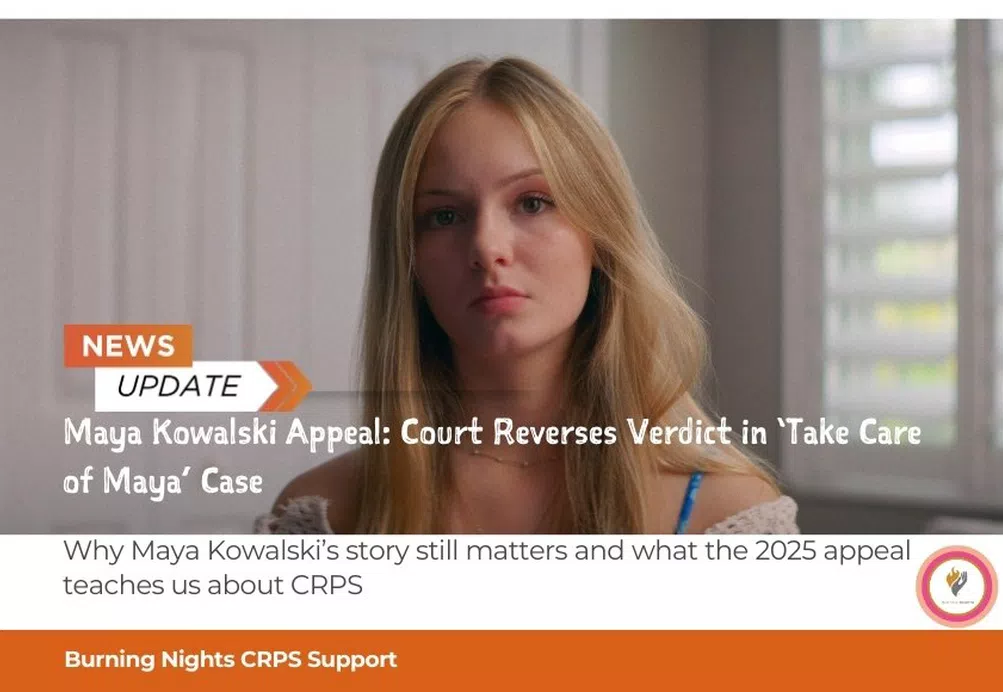
Many of you will remember the story of Maya Kowalski, the young girl whose journey with Complex Regional Pain Syndrome (CRPS) was featured in the Netflix documentary ‘Take Care of Maya.’ The film shocked audiences by showing how a child and her family were torn apart after seeking treatment for Complex Regional Pain Syndrome (CRPS), and it was suspected that she was being abused by her mother, Beata.
Her case has deeply resonated with people living with CRPS and their families around the world, including here in the UK. It raised important questions about how CRPS is understood, how patients and their families are treated and how devastating the consequences can be when those living in pain are not believed.
Her case has deeply resonated with people living with CRPS and their families around the world, including here in the UK. It raised important questions about how CRPS is understood, how patients and their families are treated and how devastating the consequences can be when those living in pain are not believed.
In 2016, Maya’s parents, Beata and Jack Kowalski, brought their daughter to Johns Hopkins All Children’s Hospital in Florida when Maya’s pain became unbearable. Beata was a registered nurse and knew her daughter’s condition extremely well. She knew which treatments worked and which didn't.
Beata believed strongly in Ketamine infusions as part of Maya’s treatment, after they had previously shown some success for her daughter in Mexico. However, the Johns Hopkins Hospital staff questioned Maya’s CRPS diagnosis. They raised serious concerns about possible child abuse or child neglect, suggesting Beata was suffering from a rare psychiatric condition known as Munchausen syndrome by proxy or what is now called Factitious Disorder Imposed on Another (FDIA) in the USA, or Fabricated or induced illness (FII) in the U.K.
Maya was kept in hospital ‘custody’ (the shelter order granted by the State) for 3 months while investigations took place. During this time, Beata was not allowed to see her daughter. After 87 days without any physical contact with Maya, in January 2017, heartbroken and desperate, Beata took her own life – something her family believe was the direct result of the separation and disbelief they all faced. If you haven’t read our original article, you can catch up on The Story Behind Maya Kowalski, which explores what happened to Maya and her family in more detail.
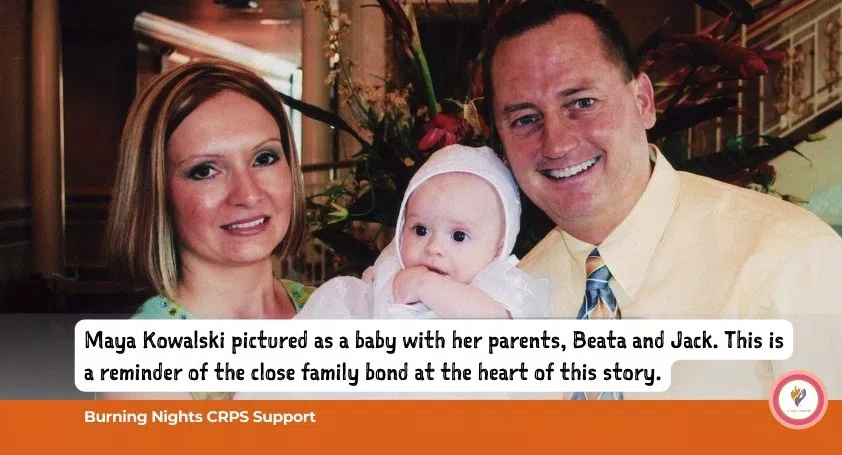
In 2018, the Kowalski family filed a lawsuit, and after years of legal battles, they finally had their day in court in 2023. The jury found the hospital responsible for false imprisonment, medical negligence and emotional distress, awarding the family approximately $213 million, which was one of the largest verdicts ever against a hospital. Immediately following the verdict, Johns Hopkins All Children’s Hospital made the move to appeal against it.
For many in the CRPS and chronic pain communities, this ruling represented long-awaited recognition of the suffering caused when patients and families are dismissed or disbelieved. It also brought international attention to the importance of compassion and understanding in rare pain conditions.
In late October 2025, after more legal wrangling, a Florida appeals court overturned the 2023 verdict.
In its written decision released in October 2025, the appeals court explained that the original trial judge had not applied the law correctly. The judges said a specific Florida law should have protected the hospital because it requires healthcare professionals to report suspected child abuse and protects them when they take part in child-protection processes honestly and in good faith. Due to this, the court said the hospital should have been legally protected from being sued over actions linked to those reports.
The panel of three judges also said the lower court was wrong in its interpretation of claims of emotional harm. They found that the legal standard used to decide whether the hospital had intentionally caused emotional distress was incorrect.
When looking at the financial punishment, known as punitive damages, the judges said there was not enough strong evidence to show that the hospital knowingly acted in a harmful or reckless way. Because of this, they ruled that these damages should never have been put before the jury to decide.
Finally, the appeals judges agreed that the trial judge should have either ordered a new trial or made a legal decision themselves to end the case at that stage. This would have meant the outcome was decided by a judge, rather than being left to a jury.
Therefore, the court cancelled (called vacated in law) the previous $213 million judgment. The judges also determined that certain parts of the original case, such as punitive damages, were not legally supported.
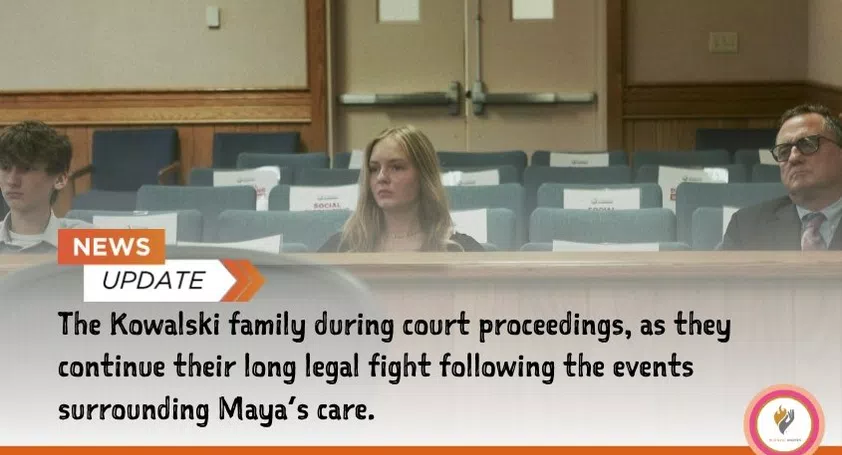
For Maya and her family, the court ruling is undoubtedly a big setback. After almost a decade of fighting for accountability, the legal outcome remains uncertain.
The result from the hospital’s appeal means that while the Kowalski family’s claims are not completely dismissed, the earlier legal victory has now been set aside. This means that some parts of the case may need to be retried.
The family have already said they plan to continue their battle through the courts, seeking justice for Maya's mum, Beata and also for better protection for families living with CRPS and other complex medical conditions.
The 'Take Care of Maya' story has become symbolic for many families affected by CRPS and other chronic pain conditions. It illustrates how medical misunderstanding can spiral into something devastating when pain is not believed or when families are treated with suspicion.
For people living with CRPS, trust and good communication between patients, families and healthcare teams is vital. When that trust breaks down, the consequences can be tragic, just as Maya’s story so painfully demonstrates.
This case and Maya's story highlight the need for healthcare professionals to approach rare and complex pain conditions with openness, empathy and humility. It also underscores why awareness campaigns like CRPS Awareness Month are so important, to ensure no family ever feels dismissed or doubted again.
At Burning Nights CRPS Support, we see Maya Kowalski’s case as a reminder of what happens when patients' and families' voices aren’t heard. Every person living with CRPS deserves to be believed and supported, and every family deserves to be treated with respect when advocating for their loved one’s care.
When a child or adult is living with CRPS, the best outcomes happen when healthcare teams and families work together. The Royal College of Physicians' CRPS Guidelines talk about the need to have a multidisciplinary team for CRPS patients' long-term care and management. That means valuing lived experience, encouraging second opinions and supporting the emotional and psychological well-being of everyone involved.
As the legal process continues in the United States in Maya’s case, here in the UK we will keep following the case and sharing updates with the CRPS community. Whatever the final outcome, Maya’s story has already changed how the world views complex pain conditions and family advocacy
At Burning Nights CRPS Support, we remain committed to:
If you or someone close to you is struggling with CRPS and feels dismissed or unsupported, please remember that you are not alone. We’re here to listen and help.
Reach out to us through our Counselling and Support Services or join our peer support groups to connect with others who understand. The Maya Kowalski story reminds us all how vital it is to be heard, believed, and supported.
Together, we can build a world that recognises invisible pain, values lived experience and ensures every person with CRPS receives the care, compassion and respect they deserve.
If Maya’s story has raised concerns for you about how your CRPS developed or how your healthcare has been handled, please know that legal support is available.
At Burning Nights CRPS Support, we have a dedicated Legal Panel of experienced professionals who understand the complexities of CRPS and can offer guidance in a sensitive and supportive way. Some of the law firms also offer advice on other areas of law as well. Whether you’re seeking advice, clarity, or simply want to explore your options, our legal panel is here to help you take the next step with confidence.
If you think you may have symptoms of Complex Regional Pain Syndrome (CRPS), it’s important to seek medical advice. We recommend asking your GP or healthcare professional for a referral to a pain consultant or a specialist CRPS centre. You can find more guidance on this in our How to get symptoms assessed page.
If you or someone close to you is living with CRPS, please remember you are not alone. Burning Nights CRPS Support offers a range of services designed to support you, including regular online support groups, live chat, our online community forum, and more. These spaces are here to provide understanding, connection, and reassurance from people who truly understand what you’re going through.
If this article has brought up difficult emotions or you have been affected by any of the issues discussed, please reach out for support. In the UK, you can contact the Samaritans on 116 123. In the USA, you can call or text 988, the Suicide & Crisis Lifeline. Both services offer free, confidential support 24 hours a day, 7 days a week.
We use cookies to improve your experience. By accepting you agree to our cookie policy